Search
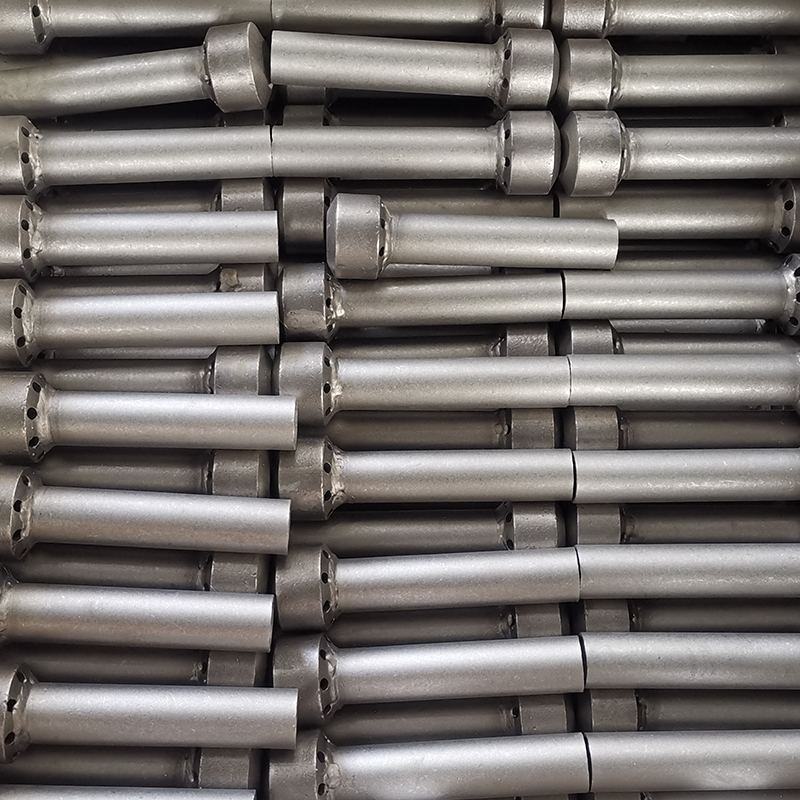
In plurimis medicamentis industriae et utilitatis boilo- nis, a Boiler aer COLLUM typically consequitur uniformis airflow distribution quam slotted aer COLLUM praesertim propter geometriam circularem vel multi-portum, quae velocitatem symmetricam efficit circa punctum missionis. This is especially evident in fluidized bed systems, where an afbc boiler air nozzle must maintain even fluidization pressure across the entire bed area to keep the bed material properly suspended. Field measurements from combustion optimization studies commonly show that a well-designed Boiler aer COLLUM can maintain airflow deviation within ± V% ad ± VIII% across the nozzle array, while a slotted air nozzle, due to its elongated opening and directional bias, often exhibits deviation in the range of ± XII% ad ± XVIII% sub similis operating pressura et onus conditionibus.
This does not mean a slotted air nozzle is inferior in every scenario. Its long, narrow opening is advantageous for creating a wide, flat air curtain, which is useful in specific staged-combustion or wall-blanketing applications. However, when the operational priority is consistent air-to-fuel mixing across the entire combustion chamber cross-section, a Boiler air nozzle generally outperforms a slotted air nozzle in distribution consistency, repeatability, and resistance to localized flow bias. In fluidized bed combustion, this same principle applies to the boiler bed nozzle layout, where consistent air injection across every point of the distributor plate is essential for stable bed fluidization.
Cur Airflow Uniformity Rei ad Boiler Users
Aerifluxus uniformitas non est cura mere academica. Boiler operariorum curam de eo est quod distributio aeris inaequalis directe afficit combustionem efficientiam, emissiones et apparatum longitudinis. When one section of the furnace receives excess air while another is starved, the result is incomplete combustion in some zones and excess oxygen in others. This imbalance can raise unburned carbon in fly ash, increase carbon monoxide emissions, and create localized hot spots that accelerate refractory and tube wear. In an afbc boiler air nozzle system specifically, uneven distribution can also cause localized bed defluidization, which leads to agglomeration and clinker formation within the bed material.
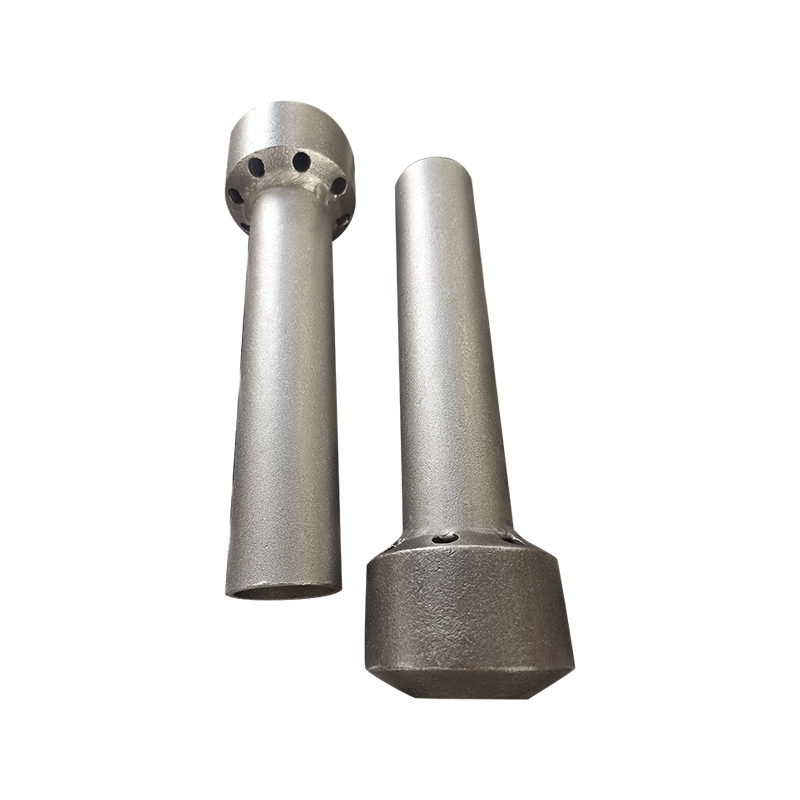
Boiler aer COLLUM
Common Symptoms of Poor Airflow Distribution
- Elevatum CO lectiones non obstante sufficiens summa aeris copia
- Fornax inaequale exit gas temperatus profile
- Localised slagging vel clinker buildup prope underventilated zonis
- Incombustum carbonis contentum in fundo vel musca cinerem augeri
- Superior NOx formatio in zonis super-aerated
- Lectus inaequalis temperatus per stratum boiler lecti COLLUM distributor laminae
Because a Boiler air nozzle is engineered specifically to manage these variables, plant engineers frequently choose it when uniformity is the primary performance target rather than raw airflow volume.
Differentiae geometricae quae expellunt euismod Gap
The core reason a Boiler air nozzle outperforms a slotted air nozzle in uniformity comes down to geometry and how each shape interacts with duct pressure fluctuations.
Boiler Aeris Nozzle Geometria
A typical Boiler air nozzle uses a round or multi-port circular opening. This shape allows air to accelerate symmetrically as it passes through the throat, producing a jet with consistent velocity across its circumference. Because the pressure recovery is symmetrical, the resulting airflow pattern remains stable even when upstream duct pressure varies slightly from one nozzle position to another. This same circular-port principle is why an afbc boiler air nozzle is preferred over slot-style openings for windbox-to-bed air delivery, since bed fluidization depends heavily on predictable, repeatable jet velocity at every port.
Slotted Aeris Nozzle Geometry
A slotted air nozzle uses an elongated rectangular opening. Dum hoc consilium praestantius est ad velum latum, instar cortinae schedae producendum, sensibilior est variatio pressionis secundum longitudinem. The ends of the slot often experience different velocity than the center, which creates a natural non-uniformity that is difficult to correct without additional flow-straightening devices.
| Parameter | Boiler Aeris Nozzle | Slotted Air Nozzle |
|---|---|---|
| Velocitas declinatio per COLLUM ordinata | ± V% ad ± VIII% | ± XII% ad ± XVIII% |
| Sensus in flumine pressura fluctuatio | low | Moderari ad High |
| Aeris jet exemplaris | Focused, conus symmetricus | Plana, velum latum |
| Best suited application | Punctum-fonte mixtis zonae et tori distributoris fluidi laminis | Wall-blanketing vel sagum zonis |
Impact in Combustion Efficiency and Emissions
Distributio airflow uniformis ex colliculo aeris boiler directe ad complementum combustionis confert. When air is distributed evenly, the fuel-air mixture reaches stoichiometric balance more consistently throughout the furnace volume, which reduces the excess air margin operators need to maintain as a safety buffer against incomplete combustion. In an afbc boiler air nozzle configuration, this same uniformity ensures that fluidizing air reaches every section of the bed at a velocity sufficient to keep particles suspended without over-fluidizing localized zones, which helps stabilize bed temperature and improve carbon burnout.
Many boiler operators report that switching from a slotted air nozzle configuration to a Boiler air nozzle configuration allows a reduction in excess air ratio by roughly 2% to 4% servato eodem vel meliore carbonii burnout. Since every percentage point reduction in excess air can improve boiler thermal efficiency by approximately 0.5% to 1%, this uniformity advantage translates into a measurable fuel savings over an annual operating cycle. Operators of fluidized bed units often see similar benefits when upgrading an aging boiler bed nozzle layout to a design with tighter manufacturing tolerances and more consistent port sizing.
NOx CO Considerationes
A Boiler air nozzle's tighter velocity control also helps limit the formation of localized high-oxygen pockets that drive thermal NOx generation. Simul, quia zonae subventilatae elevatae sunt, CO formatio etiam ab incompleta combustione reducitur. A slotted air nozzle can achieve similar emissions control, but typically requires more careful tuning and more frequent field adjustment to compensate for its inherent flow variability.
Operational and Maintenance Considerations
Ultra uniformitatem airflui rudis, plures factores practici commovent quae genus collium pro data boiler systematis potior est.
Fouling et exesa resistentia
The narrow opening of a slotted air nozzle is more prone to partial blockage from ash or particulate buildup, which further degrades its already uneven flow profile over time. A Boiler air nozzle, with its rounder cross-section, tends to resist fouling more effectively and maintains its designed flow pattern longer between cleaning cycles. This is particularly important for a boiler bed nozzle, which sits directly beneath a bed of abrasive sand or ash material and is continuously exposed to erosive particle movement; Collum stratum foedum vel exesum cito creare potest zonas mortuas ubi materia thorax penitus fluidare desinit.
Tuning et De revolutionibus Frequency
Because a Boiler air nozzle holds its airflow characteristics more consistently, operators generally spend less time on periodic re-tuning. A slotted air nozzle, by contrast, may require more frequent damper or register adjustments to counteract flow drift caused by uneven wear or fouling along the slot length. In an afbc boiler air nozzle system, minimizing this drift is especially valuable, since bed pressure drop is a key indicator operators monitor continuously to detect fluidization problems.
Installation complexionem
- Collum aereum Boilerum plerumque facilior est align praecise, quod eius geometria circularis nullum postulationem directionis habet.
- A slotted air nozzle must be installed with exact rotational alignment to achieve its intended curtain pattern, adding installation time and inspection steps.
- Substitutio colliculi fervens aeris typice involvit pauciores gradus calibrationis post institutionem comparati ad COLLUM slotted aeris.
- Replacing a worn boiler bed nozzle usually requires matching the exact port count and spacing of the original distributor plate design to preserve fluidization uniformity.
Cum Slotted Air COLLUM adhuc esto ius electionis
Despite the uniformity advantage of a Boiler air nozzle, there are legitimate cases where a slotted air nozzle remains the better engineering choice. If the application specifically requires a continuous air curtain along a furnace wall, such as for slag layer protection or tube wall cooling, the elongated shape of a slotted air nozzle is purpose-built for that function and cannot be easily replicated by a round Boiler air nozzle without installing many additional units.
In these wall-protection scenarios, uniformity across the length of the slot is less critical than achieving continuous coverage, so the inherent flow variability of a slotted air nozzle is an acceptable trade-off for its coverage benefit. It is worth noting, however, that in fluidized bed boilers, the slotted design is rarely used at the bed level at all, since an afbc boiler air nozzle almost always relies on round or capped-port geometry to prevent bed material from sifting back into the windbox during shutdown.
Electio Practica Ducatus
For most operators evaluating a Boiler air nozzle against a slotted air nozzle, the decision should be based on the specific combustion objective rather than a blanket assumption that one is universally superior.
- Collum aereum Boilerum elige, cum punctum-fontis cohaereat, permixto trans fornacem late fornacem, sectio prioritas est.
- Collum aeris Boiler elige cum excessus aeris extenuando et efficientia scelerisque meliori propositum propositum est.
- Choose a slotted air nozzle when continuous wall or curtain coverage is required over a long linear span.
- Specify an afbc boiler air nozzle whenever the project involves a fluidized bed unit, since bed fluidization stability depends on consistent, erosion-resistant port geometry.
- Evaluate the condition of the existing boiler bed nozzle plate during any efficiency audit, since worn or eroded ports are a common hidden cause of poor bed fluidization and elevated fuel consumption.
- Consider a hybrid layout, using a Boiler air nozzle for primary combustion air and a slotted air nozzle for wall protection zones, when the boiler design allows for both functions.
Notitia constanter sustinet quod a PRAEFURNIUM aer COLLUM praebet uniformis airflow distributionem quam slotted aer COLLUM in the majority of combustion-air applications, and this advantage becomes even more pronounced in fluidized bed systems, where an afbc boiler air nozzle and a properly designed boiler bed nozzle plate work together to keep the bed evenly fluidized and combustion stable. The final selection should always be validated against the specific furnace geometry, fuel type, and operational goals of the boiler system in question.